Reaching your sixties and beyond often brings more time for family, hobbies, and the things you enjoy, yet it also brings a higher chance of stroke that can appear without much notice. The real challenge is that the warning signs sometimes show up in subtle ways that get mistaken for ordinary aging, tiredness, or even a side effect of medication, leading families to wait and hope things improve on their own. Every minute that passes without help can affect how much function returns later, and that uncertainty leaves many people feeling helpless when a loved one suddenly seems confused or unsteady. Knowing exactly what to watch for changes everything because it lets you act with confidence instead of fear. But there’s one detail about how these signs often appear in older adults that surprises even careful caregivers — and we’ll cover that important point before the end of this article.
Why Stroke Risk Increases After Age 60
As the years pass, arteries naturally lose some flexibility and can develop more plaque buildup. At the same time, conditions such as high blood pressure, irregular heart rhythms, and diabetes become more common. Research from the Centers for Disease Control and Prevention shows that the chance of stroke roughly doubles with every decade after age 55. The truth is, many people over 60 live with one or more of these factors and still feel fine day to day. What changes everything is when a clot or bleed interrupts blood flow to the brain — and that’s when quick recognition matters most.
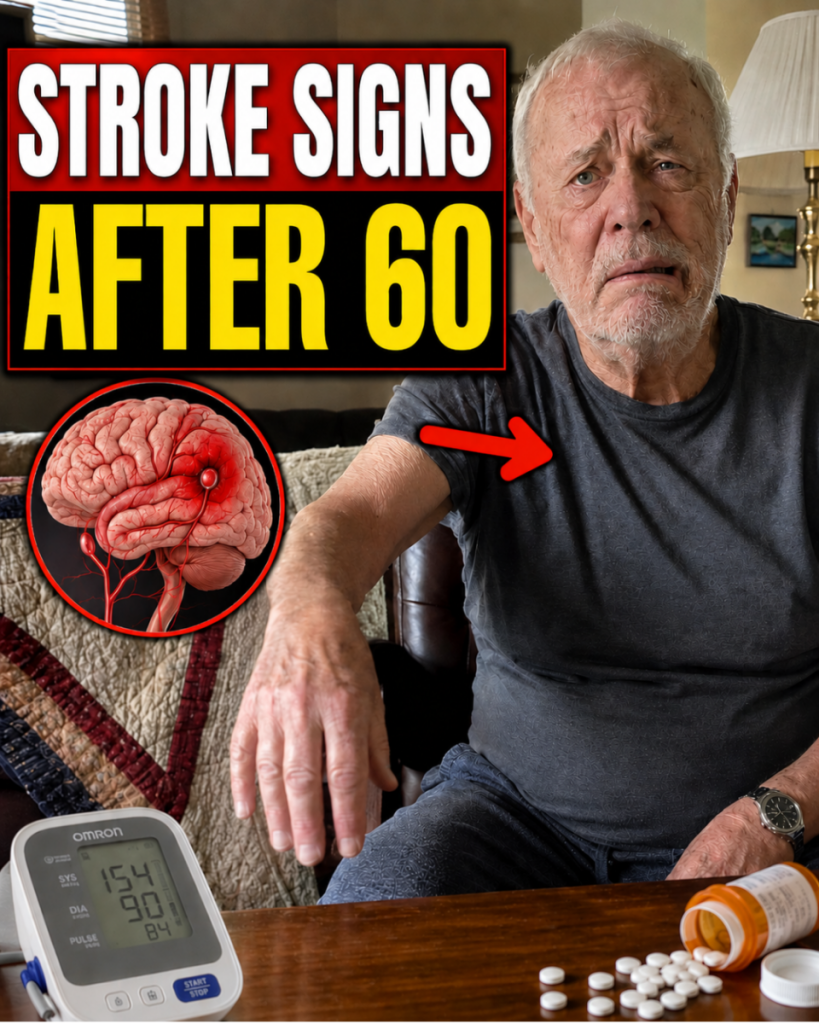
High blood pressure stands out as the leading controllable contributor. Readings that stay elevated over time put extra strain on the vessels that feed the brain. Studies tracking people over many years have found that the longer someone lives with uncontrolled high blood pressure, the greater the added risk. A home monitor showing numbers in the 150s over 90s, like the one pictured with this article, is a signal worth discussing with a doctor rather than brushing aside.

Use the FAST Test to Spot the Most Common Warning Signs
The American Stroke Association promotes a simple four-step check called FAST because it works even when stress is high. Here’s how each part helps after 60:
- F — Face: Ask the person to smile. Does one side of the mouth droop or feel numb while the other side moves normally?
- A — Arm: Have them raise both arms straight out. Does one arm drift down or feel weak or numb compared with the other?
- S — Speech: Listen closely. Are words slurred, or does the person struggle to find the right words or repeat a simple sentence clearly?
- T — Time: If any of these changes appear suddenly, call emergency services right away and note the exact time symptoms began.
These classic signs often affect just one side of the body because they reflect the area of the brain that has been interrupted. In the photo that inspired this article, the arrow points toward the arm area — a common place for sudden weakness to show up. The encouraging news is that remembering these four letters gives families a practical tool they can use in seconds.
Other Changes That Can Signal Trouble in Older Adults
Stroke signs don’t always follow the textbook pattern, especially after 60. Sometimes the changes are milder or appear in different combinations, which is exactly why so many families feel caught off guard. Here are additional signals worth treating as urgent:
- Sudden confusion or trouble understanding simple conversation, even without obvious slurred speech
- Vision changes such as blurriness, double vision, or loss of sight in one or both eyes
- Dizziness, loss of balance, or unexplained stumbling that comes on quickly
- A severe headache that starts suddenly and feels different from any usual headache
- Sudden fatigue, drowsiness, or a strong desire to sleep that doesn’t fit the situation
- Numbness or weakness that affects the leg or the whole side of the body
The reality is these symptoms can appear alone or together, and they almost always start abruptly rather than gradually. What many people don’t realize is that even brief episodes deserve the same immediate response, because they can be an early warning of something more serious ahead.

Why Blood Pressure Monitoring Matters So Much After 60
One of the strongest connections to stroke risk in later life is blood pressure that stays higher than ideal. The image accompanying this article shows a reading of 154 over 90 along with medication — a common scene in many homes. When pressure remains elevated, it quietly damages artery walls over time and raises the likelihood of both clot-related and bleeding strokes. The good news is that tracking numbers at home and working with a healthcare provider to keep them in a safer range is one of the most effective steps available. Research consistently links better blood pressure control with lower stroke occurrence in older adults.
What to Do the Moment Any Warning Sign Appears
If you or someone you care for shows any of the changes described above, act without delay. Follow these clear steps:
- Call 911 or your local emergency number right away. Tell the dispatcher you suspect a stroke and give the exact time symptoms started.
- Help the person sit or lie down in a comfortable position and loosen any tight clothing around the neck or chest.
- Stay calm and speak reassuringly. Keep them awake if possible, but do not offer food, drink, or any medication unless a professional instructs you to.
- Gather key information for the medical team: a current medication list, known allergies, recent health changes, and the precise time everything began.
- If the person has a known history of heart rhythm issues or takes blood-thinning medication, have that information ready — but never start or stop any treatment on your own.
Here’s the important part: even if symptoms seem to improve after a few minutes, still seek emergency care. Brief episodes can be just as serious as longer ones.

Simple Daily Habits That Support Brain Health
While nothing removes risk entirely, consistent habits help manage the factors that contribute to stroke. Consider adding these practical steps:
- Check blood pressure at home several times a week and keep a simple written log to share at medical visits.
- Move the body gently every day — a walk around the block, chair exercises, or gardening all support healthy circulation.
- Fill most of the plate with vegetables, fruits, whole grains, nuts, and fish while limiting excess salt and processed foods.
- Take any prescribed medications for blood pressure, cholesterol, or heart rhythm exactly as directed.
- If you smoke, ask your doctor about the most effective quitting support available today.
- Limit alcohol and stay connected with friends and activities that keep the mind engaged.
The truth is these small, steady actions add up. Many families find that once they start tracking blood pressure and moving more, they feel more in control of their overall health picture.
In Closing
Stroke warning signs after 60 deserve immediate attention because fast response makes a meaningful difference in outcomes. By learning the FAST check, staying alert to other sudden changes, and keeping blood pressure in view, you give yourself and your loved ones the best possible advantage. This article is meant to raise awareness and encourage helpful conversations with healthcare providers — it is not a substitute for personalized medical advice.
Frequently Asked Questions
What should I do if stroke-like symptoms appear and then disappear quickly?
Even if everything seems to return to normal within minutes or hours, call emergency services anyway. These brief episodes, sometimes called mini-strokes or TIAs, often signal a higher chance of a larger stroke in the near future and still require prompt medical evaluation.
Do stroke signs look the same in men and women over 60?
The core FAST signs apply to everyone. Some women may notice additional feelings such as unusual fatigue, nausea, or shortness of breath alongside the classic changes. When in doubt, treat any sudden neurological shift as an emergency.
How can families prepare before a crisis happens?
Keep a current list of medications and allergies in an easy-to-find place. Talk together about who to call and what to do if symptoms appear. Practicing the FAST check as a simple household habit removes panic when seconds count.
Disclaimer
This article provides general information only and is not intended as medical advice, diagnosis, or treatment. Always consult your physician or another qualified healthcare provider with any questions about a medical condition. If you believe you or someone else may be experiencing a stroke, call emergency services immediately.